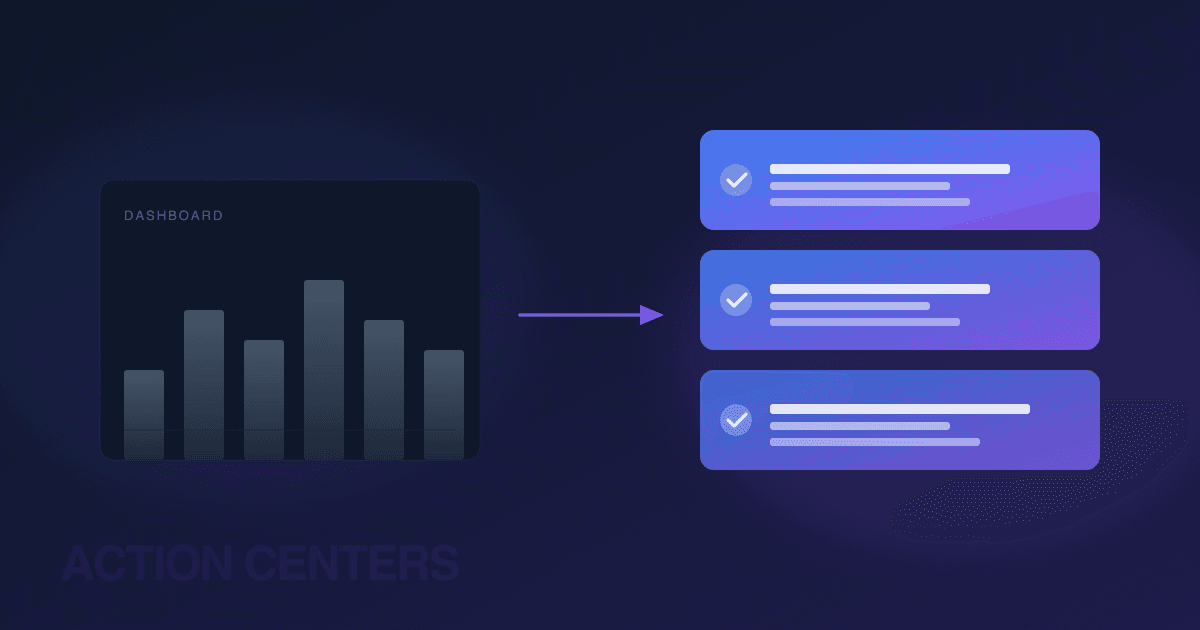
From Dashboards to Action Centers: Where GEO Tooling Is Heading in 2026
First-gen GEO tools showed you what was broken. The next generation tells you what to publish to fix it. Here's how the industry is collapsing the gap between visibility insight and content workflow.
A year into the GEO category, almost every serious tool can answer the same question: how does ChatGPT talk about your brand? You log in, you see a Share of Voice number, you see a competitor leaderboard, you see a sentiment chart. Then you stare at it.
That's the part the industry is finally fixing.
The first generation showed the wound. It didn't hand you the bandage.
If you used a GEO tool in 2025, the experience was roughly: "your visibility on prompt set A is 38%, your top competitor is 51%, and Reddit dominates your citation graph." Useful. Actionable? Only if you already had a content team that knew how to translate that into a Q3 plan.
The honest truth is that most marketing teams didn't. They had one PMM, three priorities, and now a dashboard telling them they were losing prompts they didn't know existed. The result was the same as a lot of analytics products: high subscribe rate, low retention, and a dashboard that quietly stopped being opened by month three.
The newer tools have noticed. The bet they're making is that the value isn't in the metric — it's in the next step the metric implies.
What an Action Center actually does
The pattern looks roughly the same across AthenaHQ, Peec, Otterly, and a few quieter teams: take the same telemetry the dashboard already collects, and turn each gap into a discrete, named recommendation.
A good Action Center card reads like this:
You don't appear in answers to "best project management tools for remote engineering teams". The competitor that does (Linear) is cited from these four URLs: a Reddit thread in r/ExperiencedDevs, a 2025 G2 comparison post, a YCombinator blog post, and the Linear changelog. You're not present on any of them. Highest-leverage next move: get an answer on the Reddit thread and request a profile update on G2.
What makes that card useful and not just a longer way of saying "you're losing" is that every claim is specific, citation-backed, and attached to a concrete piece of content somebody can go produce or update. Generic cards ("publish more thought leadership") get ignored. Cards that name a specific subreddit, a specific G2 listing, or a specific Wikipedia section get done.
Three industry signals worth watching
1. Auto-drafted content suggestions. AthenaHQ generates draft articles aimed at prompts you're losing. The drafts themselves are fine — what matters is the framing: GEO is becoming a content brief generator, not just a measurement layer. Whether the draft ships as-is or just unblocks a writer's first 30 minutes, the friction between insight and asset is going to zero.
2. Source-aware action queues. Peec's "Actions" tab and similar features at Otterly group recommendations by where the answer lives — Reddit, Wikipedia, G2/Crozdesk, your own changelog. This matters because the team that owns "publish a Reddit comment" is almost never the team that owns "update product page meta tags". The action queue routes work to the right hands.
3. Weekly "what changed and why" notifications. Bluefish and BrandRank push not just that visibility moved but a candidate explanation — a competitor launched, a Reddit thread went viral, a new source got cited. This compresses the loop between an incident and the team noticing it from weeks to hours.
Why this is harder than it looks
It's tempting to think of an Action Center as a thin wrapper around the existing data: "we already know you're missing from prompt X, just write that on a card." In practice, the recommendation quality bar is brutal.
A bad card ("update your SEO!") is worse than no card at all because it teaches the user to ignore the panel. A good card needs three things at once: a specific prompt or topic the brand is losing, a cited destination URL the user can actually act on, and a plausible path from doing the action to changing the answer. Get any one of those wrong and the whole feature stops being trusted.
That's why the better Action Center implementations are doing less invention than you'd guess. The recommendation isn't an LLM hallucinating a content strategy — it's the citation graph the dashboard already built, re-projected with a verb at the front.
What we're building toward
This is the direction we're building toward in SeenForAI. Showing you that your Share of Voice dropped on a Tuesday is the easy part. Telling you that it dropped because a specific Reddit thread now ranks for the prompt, and that the fastest way back is a substantive answer on that thread today — that's where the category is going, and that's the work that gets done next.
If your current GEO tool ends at the dashboard, that's not a permanent state of the world. It's a 2025 product decision that 2026 is quietly walking past.
Further reading
More Posts
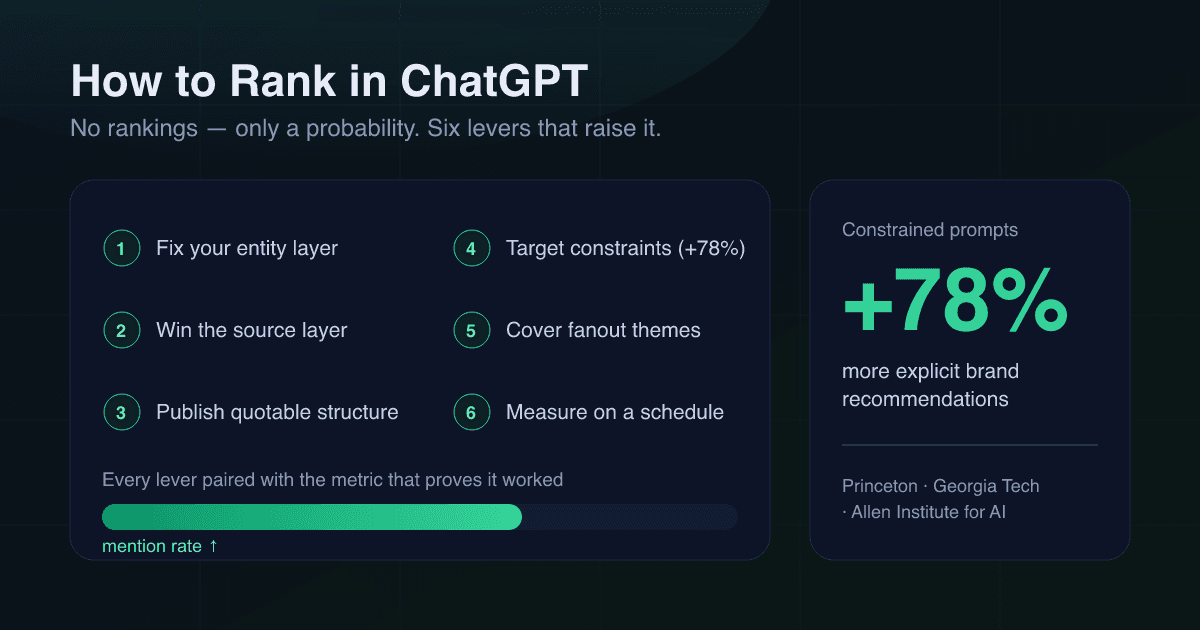
How to Rank in ChatGPT: A Measurable 6-Step Playbook (2026)
ChatGPT has no rankings — only a probability your brand gets named. Six levers that raise it, with data on what actually moves the needle.

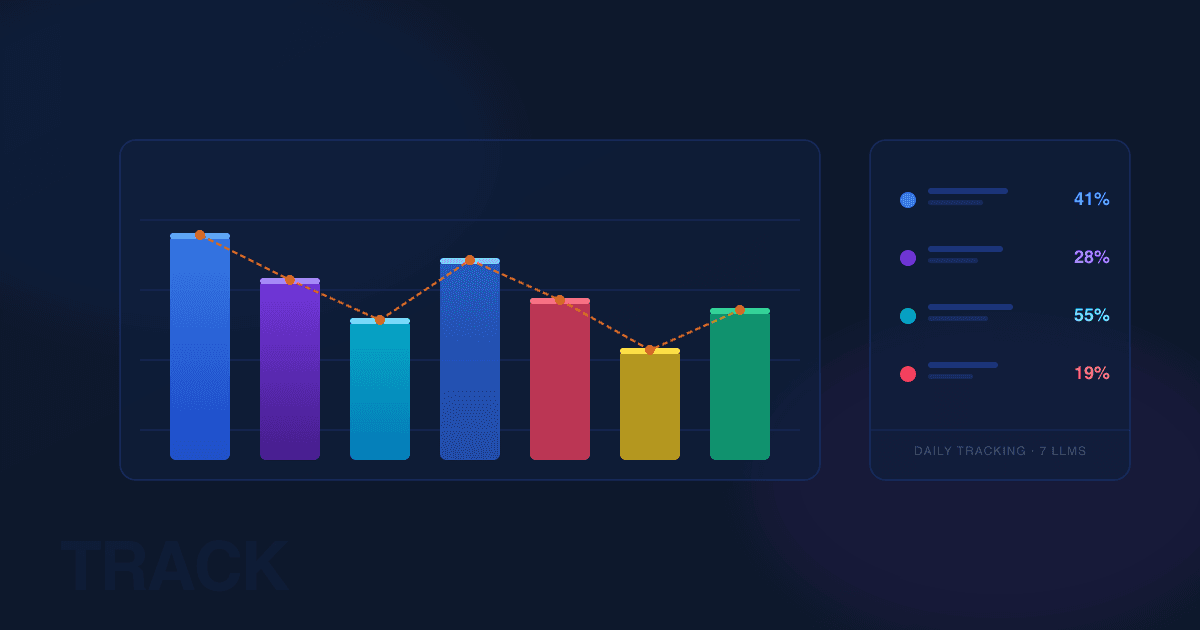
How to Track Your Brand Mentions in ChatGPT
GA4 won't show you LLM referrals. Here are three approaches to tracking your brand in ChatGPT — and when each one makes sense.
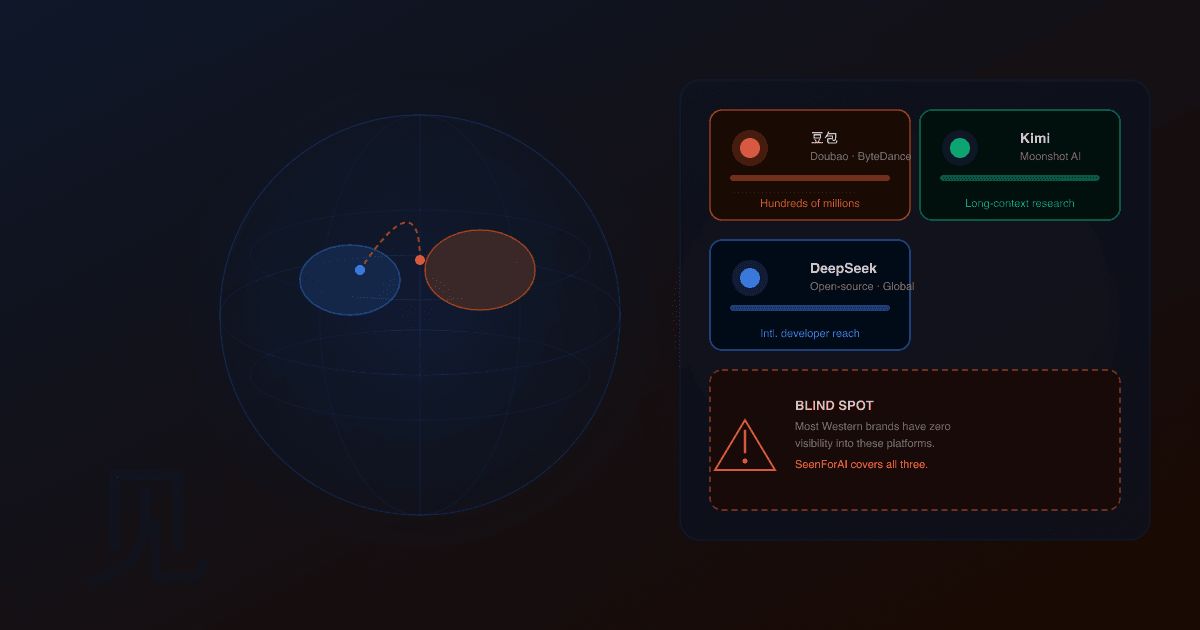
Why Chinese LLMs Matter for Global Brands
Doubao, Kimi, and DeepSeek serve hundreds of millions of users — most Western brands have no idea what these models say about them.
Product Newsletter
Stay informed
Receive release notes, and workflow tips from SeenForAI.