Query Fanouts: The Hidden Layer of AI Search That Decides Your Visibility
When a user asks ChatGPT or Gemini one question, the model silently runs 8-15 sub-queries behind the scenes. Whether your brand appears in those hidden searches is what really determines your AI visibility.
When a buyer types "What's the best project management tool for remote teams?" into ChatGPT, the model doesn't search for that exact string. It silently fans the question out into 8-15 sub-queries, runs them in parallel against its retrieval layer, and synthesizes the final answer from the results. None of that is visible to the user — and almost none of it is visible to the brands trying to track their AI presence.
This hidden layer is called query fanout, and it's quickly becoming the most important — and most under-measured — mechanic in generative search.
What's actually happening behind the scenes
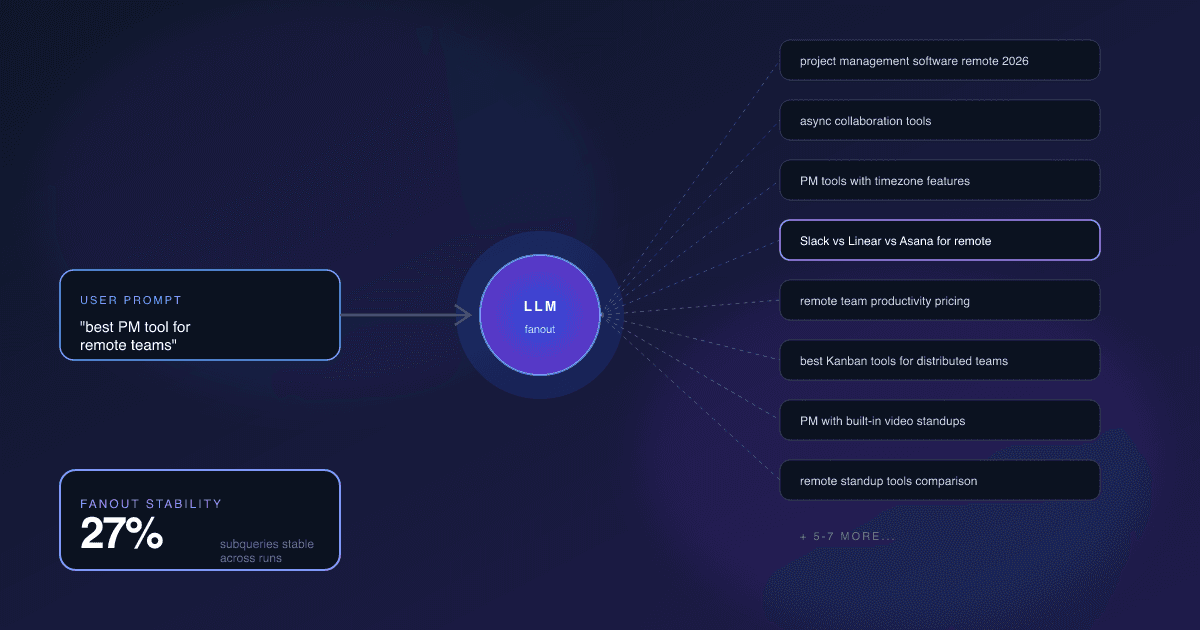
A single user prompt like "best project management tool for remote teams" expands into something like:
├─ project management software remote teams 2026
├─ asynchronous collaboration tools
├─ PM tools with timezone features
├─ Slack vs Linear vs Asana for remote
├─ remote team productivity software pricing
├─ best Kanban tools for distributed teams
├─ project management with built-in video
├─ remote team standup tools
└─ ... (5-7 more)
The LLM then pulls passages from the search results of each sub-query, scores them against the original question, and stitches the top fragments into the synthesized answer. Your brand's visibility in the final answer is downstream of whether you appeared in any of those 8-15 sub-queries — most of which you have never seen.
This explains a frustrating phenomenon many GEO teams hit: a brand will rank well for the obvious head terms but vanish from the AI's answer. The reason is almost always that the brand wasn't surfaced by the sub-queries the model used to compose the response.
Why optimizing fanouts directly doesn't work
The natural impulse is to figure out the exact sub-queries each model uses and optimize for those. Two reasons that fails:
Fanouts are unstable. Surfer's research found that only 27% of fanout sub-queries are stable across multiple runs of the same parent prompt. The other 66% appear once and never repeat. Chasing specific sub-queries means you're optimizing for noise.
Fanouts vary by model. ChatGPT's fanout for the same prompt looks very different from Gemini's, which differs again from Perplexity's. Optimizing for one model's fanout pattern won't transfer to the others.
The better mental model is: stop trying to optimize for fanout queries and start optimizing for fanout themes. Cluster the sub-queries you can observe into themes — pricing, integrations, async collaboration, alternatives, regional compliance — and make sure your content covers each theme deeply enough that whichever sub-query the LLM happens to fire today, you're surfaced.
A worked example
A B2B marketing automation company tracked the fanouts behind their top 10 monitored prompts using Profound's instrumentation. The first scan showed they were appearing in only 12% of fanout sub-queries — far below their ranking in traditional Google for the same head terms.
They identified five recurring sub-query themes where competitors consistently appeared and they didn't: lead-scoring methodology, HubSpot migration paths, GDPR-compliant workflows, attribution modeling, and pricing-tier comparisons. Over 90 days they shipped one pillar piece per theme — long-form, structurally clean, with clear comparison passages.
After the next quarterly refresh, fanout coverage moved from 12% to 43%, and downstream AI-referred traffic grew 156%. The lesson wasn't "rank for these specific sub-queries" — it was "make sure every theme the LLM might fan into has authoritative content from you."
What you can do today, even without enterprise tooling
You don't need a $499/mo platform to start observing fanouts. Three free tools that surface partial signal:
- Google AI Mode "Steps" tab shows the actual sub-queries the model ran. Not all of them, but enough to identify recurring themes.
- Perplexity's "Sources" panel lets you reverse-engineer which retrieval queries each citation matched.
- Server logs filtered by AI bot user agent (
ChatGPT-User,ClaudeBot,PerplexityBot,GoogleOther) show what the AIs are actually fetching from your site — which is itself a fanout signal.
Run those for a week, cluster the queries you observe into themes, and you'll usually find one or two themes where you have no coverage at all. Those gaps are the highest-leverage content investments you can make this quarter.
Where SeenForAI is heading
Fanouts are on the SeenForAI roadmap as a P1 feature. The plan is to wrap each monitored prompt with a fanout-elicitation pass, run the resulting sub-queries through the same multi-LLM monitor, and roll the results up into theme clusters in the dashboard. The goal isn't to track every sub-query — that's noise — but to surface the themes where you have a coverage gap competitors are filling.
In the meantime, the prompt set you're already monitoring is the foundation that everything else builds on. If those 30 prompts aren't constraint-rich and balanced across category, comparison, and use-case, fanout coverage won't save you. Get that layer right first.
Further reading
More Posts
Why Chinese LLMs Matter for Global Brands
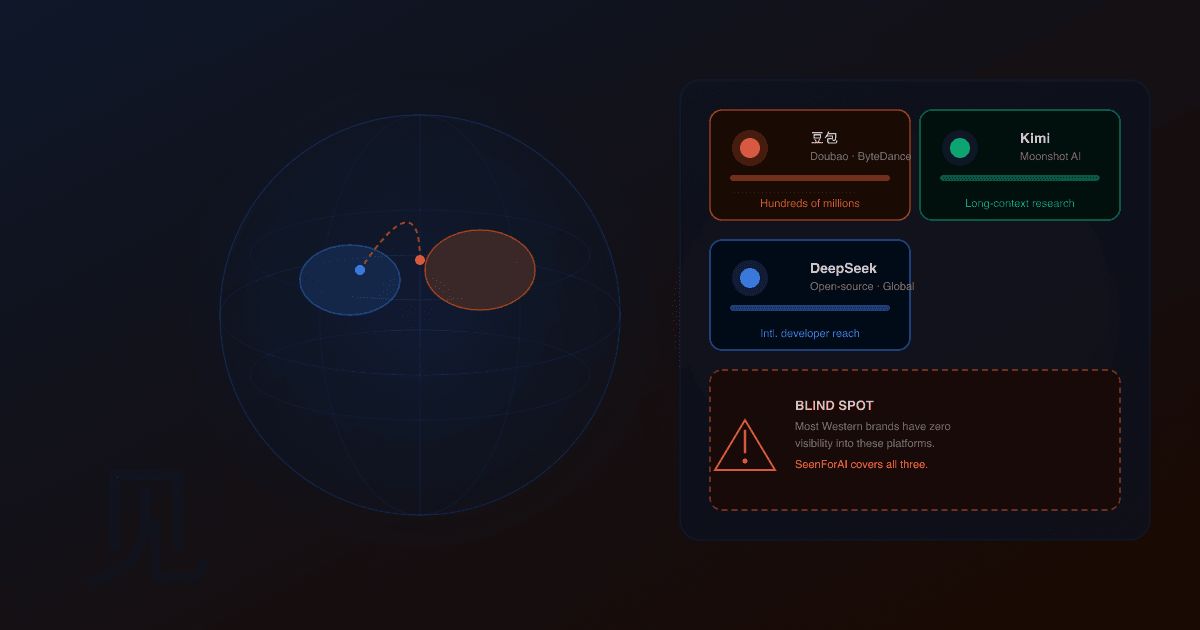
Doubao, Kimi, and DeepSeek serve hundreds of millions of users — most Western brands have no idea what these models say about them.

The 35/35/30 Rule for GEO Prompt Sets
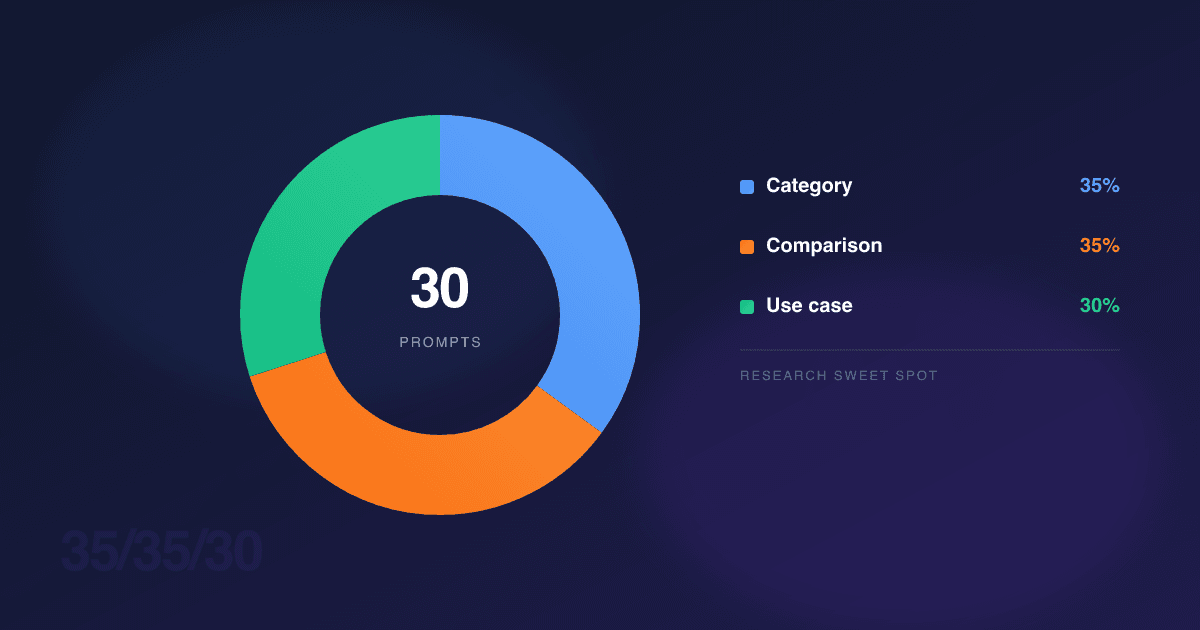
Why 30 prompts is the noise floor for AI visibility tracking, and how to balance category, comparison, and use-case prompts so your dashboard shows signal instead of noise.
Constraint Injection: The Princeton Trick That Lifts AI Brand Recommendations 78%
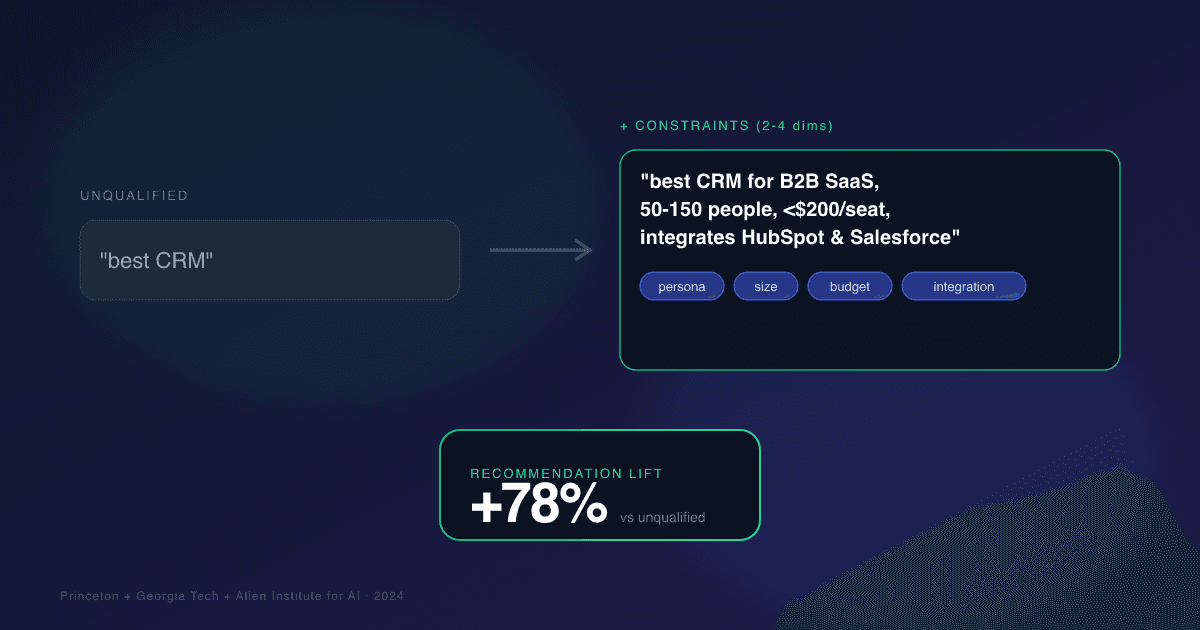
A 2024 study from Princeton, Georgia Tech, and the Allen Institute for AI shows that adding 2-4 constraints to a prompt makes LLMs surface specific brand recommendations 78% more often. Here's how to use it.
Product Newsletter
Stay informed
Receive release notes, and workflow tips from SeenForAI.