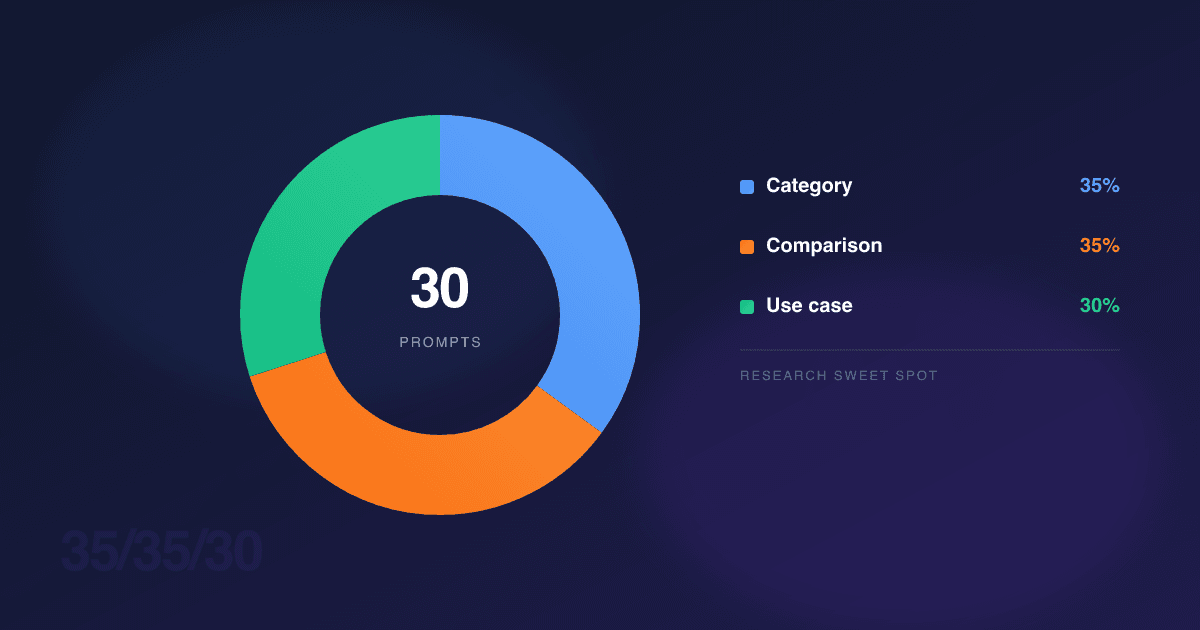
The 35/35/30 Rule for GEO Prompt Sets
Why 30 prompts is the noise floor for AI visibility tracking, and how to balance category, comparison, and use-case prompts so your dashboard shows signal instead of noise.
The first time most teams set up GEO monitoring, they pick five or six prompts they think buyers might ask, run them once, and call it a measurement. A week later they're confused — the numbers swing 20 points between runs, no two competitors look stable, and "Share of Voice" feels like a coin flip.
The problem isn't the LLM. It's the prompt set.
30 prompts is where the noise floor breaks
LLM answers are probabilistic. A single prompt run against ChatGPT can return your brand 60% of the time on Monday and 10% on Friday — both within the model's normal sampling range. With five prompts, one missing mention is a 20-point Share of Voice swing. With ten, it's still 10. You can't separate signal from noise.
Empirical work across the GEO community converges on the same number: accuracy stabilizes at around 30 prompts. Below 30, every "trend" you think you see is sampling variance. Above 50, you're mostly adding variant duplicates that don't reveal anything new. Thirty is the sweet spot — enough to drown out single-run randomness, small enough to stay maintainable.
This is why SeenForAI now defaults to 30 prompts per generation pass, capped only by your plan quota.
The 35/35/30 split, and why it matters
Within those 30, the mix is what makes the dashboard useful. After analyzing what the leading GEO platforms generate, the recurring pattern is roughly:
- 35% category prompts — broad discovery questions like "best project management tools for remote teams in 2026". These test whether your brand makes the LLM's "consensus shortlist" — the three to six names it cites by default when nothing narrows the question.
- 35% comparison prompts — direct competitive prompts like "Linear vs Asana for engineering teams" or "alternatives to HubSpot for SMB". These reveal Share of Voice when a buyer is already evaluating one specific rival.
- 30% use-case prompts — concrete buyer scenarios like "easiest way to monitor brand mentions across LLMs". These check whether the LLM connects your brand to the actual jobs buyers hire your category for.
Each segment answers a different strategic question. Lose category and you're invisible during early discovery. Lose comparison and you lose head-to-head deals. Lose use-case and you lose the buyer who already knows what they want done but doesn't yet know who does it.
Two anti-patterns that quietly poison the data
The first one looks innocent: putting your own brand name inside the prompts. "Best alternatives to MyBrand" feels like a prompt — but it isn't measuring discovery anymore, it's measuring search. Of course your brand "appears" in answers to a question that already named you. Those prompts inflate every metric and tell you nothing useful.
The second is changing the prompt set mid-quarter. Once you have a baseline, the only way to read the trend is to run the same set on the same cadence. Edit even five prompts halfway through and the longitudinal comparison is meaningless — you're now comparing two different measurements.
The fix for both: pick the set, lock it for the quarter, and let the system run.
What this looks like in practice
When SeenForAI generates a prompt set today, the action pulls your brand context, your competitor list, and your locale, then asks the model to return exactly 30 prompts split 35/35/30. A validator throws out any candidate that names your brand or any of its synonyms before they ever reach the database. The dashboard tags each row with its sub-type, so when Share of Voice drops you can immediately see whether it dropped on category, comparison, or use-case — three very different problems with three very different fixes.
If your current GEO setup is fewer than 30 prompts, or skewed entirely to one type, the simplest thing you can do this week is regenerate. The next time the chart moves, you'll actually be able to trust it.
Further reading
More Posts
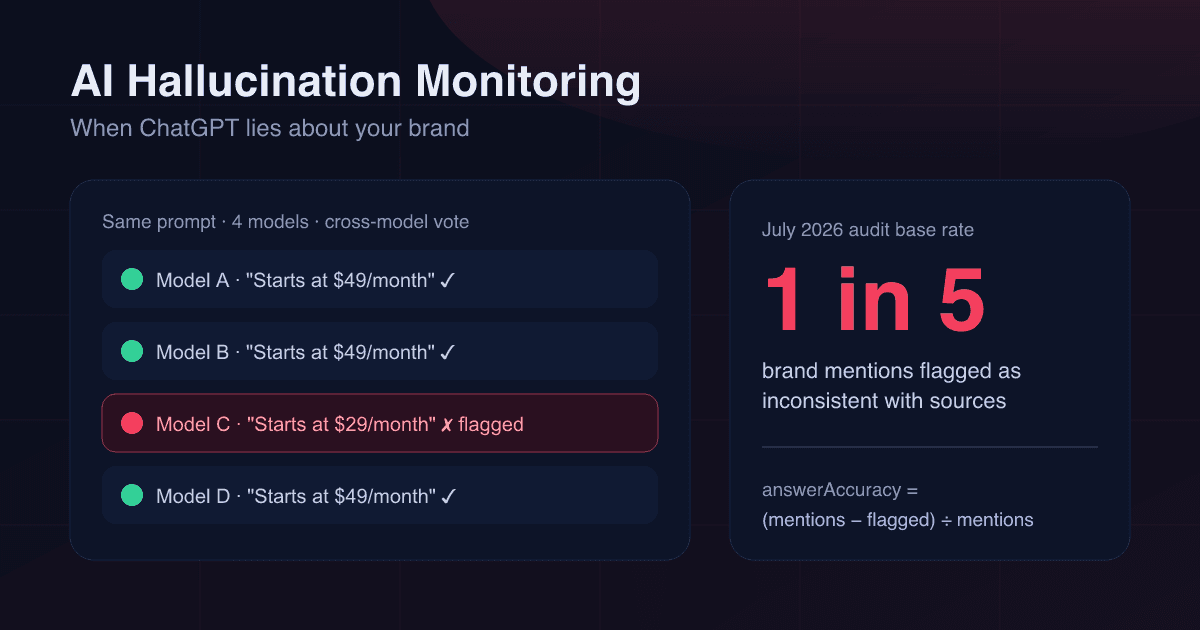
AI Hallucination Monitoring: When ChatGPT Lies About Your Brand
LLMs confidently invent pricing, features and even founders. How to detect brand hallucinations — and the multi-model voting method that verifies them.

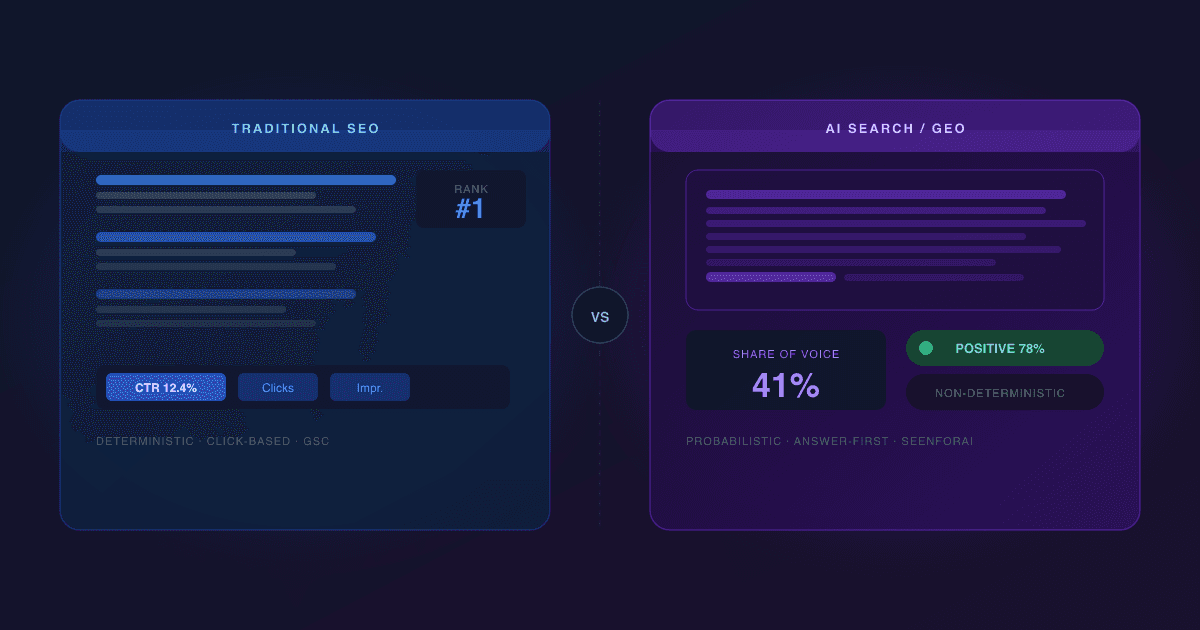
AI Search vs Traditional SEO: What's the Difference?
Rankings and LLM mentions are two separate games. Here's how they differ — and why marketers need to play both.
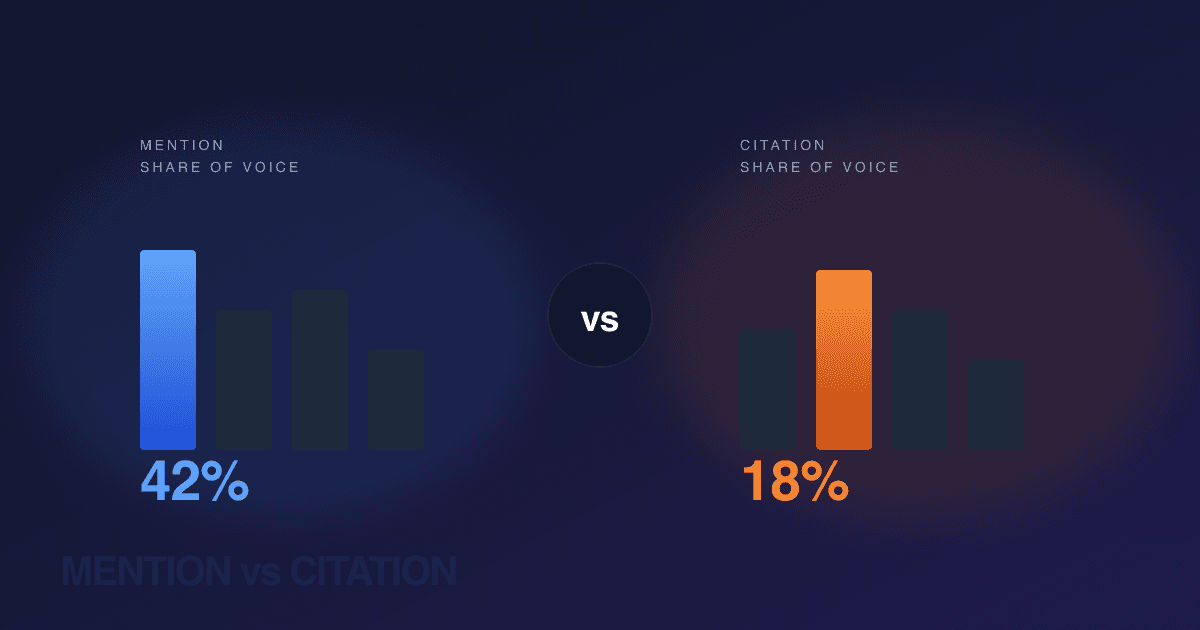
Mention vs Citation: The Share of Voice Split Most GEO Dashboards Get Wrong
ChatGPT mentions your brand in prose but cites your competitor's docs underneath. Which signal counts? Both — but they tell you completely different things, and most dashboards only show one.
Product Newsletter
Stay informed
Receive release notes, and workflow tips from SeenForAI.