Reddit, Wikipedia, and the Hidden Source Layer Shaping AI Answers
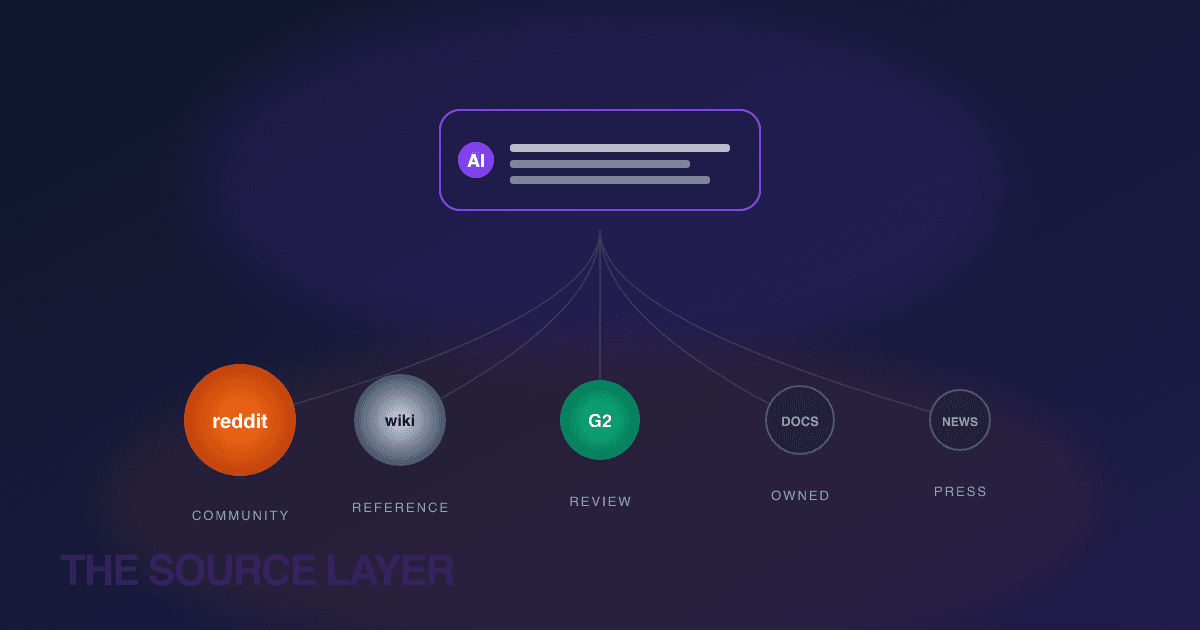
When ChatGPT recommends a vendor, look at what it cites. For most B2B categories the citation list is dominated by Reddit threads, Wikipedia infoboxes, and a handful of comparison sites — not the product pages brands spend most of their time on.
Ask ChatGPT to recommend a project management tool for a remote engineering team. Read the answer; that's the part most teams stop at. Then scroll to the bottom of the response and read the citations. The story those citations tell is the part the rest of the marketing world is still catching up to.
For most B2B categories, the dominant cited sources aren't press releases, paid placements, or even brands' own carefully written product pages. They're Reddit threads, Wikipedia articles, and a small recurring set of comparison sites. The content your AI-search visibility is built on is, increasingly, content you didn't write.
What citation-category analysis keeps showing
Profound made this insight load-bearing in their dashboard — group every cited URL by what kind of source it is (Reddit, Wikipedia, news, docs, LinkedIn, comparison sites, own-domain) and watch the distribution. Across most B2B SaaS categories the pattern is remarkably consistent:
- Reddit threads punch far above their weight. A single high-upvote answer in r/ExperiencedDevs or r/sysadmin can be the dominant cited source for a category-level question, weeks after the thread was posted.
- Wikipedia is invisible to humans but loud to LLMs. Most buyers don't read the Wikipedia article for a B2B category. Models retrieving authoritative neutral references do — and Wikipedia's infobox and "Notable companies" list often shape who gets named.
- A small set of comparison and review sites recurs everywhere. G2, Capterra, TrustRadius, Gartner Peer Insights, and a handful of category-specific roundups account for an outsized share of the rest.
- Brand-owned domains land further down the list than brand marketers expect. Your own product page is in there for branded queries, but for category-level discovery it's often a minor contributor.
Consumer queries skew differently — TikTok, Reddit, YouTube transcripts and major-publisher reviews dominate there. The pattern isn't universal. But for the buying-software questions most GEO programs care about, the source layer leans heavily community + reference + third-party-review.
Why this isn't intuitive
It's worth sitting with why this surprises people, because the implication runs counter to a decade of muscle memory.
Traditional SEO trained brands to obsess over the page they own. Product page meta tags, on-page H1s, an internal linking graph that pushes authority toward the buyable URL. That work pays off for "branded-query Google search" and a chunk of category Google search. It pays off much less for "ChatGPT recommends a vendor", because the language model isn't really doing search-engine ranking against your page — it's pattern-matching against the corpus of how this category is talked about, and citing the sources that most authoritatively reflect that conversation.
The conversation about your category, in most B2B verticals, doesn't happen primarily on vendor sites. It happens on Reddit, on G2 reviews, in subreddit comparison threads, on the Wikipedia talk page. Your product page is a single, self-interested voice in a much larger discussion the model is listening to.
What this actually changes about content strategy
A few practical shifts fall out of taking this seriously:
Reddit presence stops being a "nice to have." If a subreddit thread is one of the top three cited sources for your category's discovery prompts, then the absence of a substantive answer from your brand (or, more often, the presence of a one-liner from a marketing intern) is leaving real visibility on the table. The work isn't to "do Reddit marketing" — it's to make sure that when the buying conversation happens in public, you're not silent.
Your Wikipedia article is content infrastructure. If your company has one — and it should, for any B2B brand at meaningful scale — the accuracy of the infobox, the founding date, the category labelling, and the "see also" list quietly shapes what every LLM learns to associate with you. Most brands check it once at founding and never again. Treat it like documentation.
Comparison-site syndication matters more than product-page rewrites. A current, complete G2 listing with up-to-date pricing, feature checkboxes, and a non-trivial review count is doing more work for your AI visibility than a fourth iteration of your homepage hero copy. The marginal ROI on category-review presence is meaningfully higher than the marginal ROI on owned-page polish.
Press releases are still mostly invisible. A decade of "earned media" muscle memory points toward TechCrunch coverage as the high-prestige outcome of a brand-awareness program. LLMs cite tech press sometimes, but rarely as the first source for category questions. Plan accordingly.
Caveats worth flagging
Two caveats prevent this from being a clean rule.
The first is category variance. Healthcare, legal, financial-services and other regulated categories cite different source mixes — official body documents and accredited publishers outweigh Reddit. If you're in one of those categories, citation-category analysis is still the right diagnostic, but the answer it gives will look different.
The second is that "where the LLM cites from today" can shift quickly. A Wikipedia edit war, a new authoritative source emerging in your space, or a model provider changing its retrieval grounding can move the citation graph noticeably between quarters. The right cadence is to watch the citation-source category distribution as a recurring signal, not to set strategy once based on a single snapshot.
What this looks like in SeenForAI
We group every captured citation by source category — Reddit, Wikipedia, news, docs, LinkedIn, comparison sites, own-domain — and surface the distribution next to your Share of Voice. The chart isn't useful because it's pretty. It's useful because it lets you see, at a glance, which content bucket is doing the work for your category and which one you've under-invested in.
If you're audit-ing your AI visibility this quarter, the source-category breakdown is the slide to spend the most time on. It usually says something the product-page-focused parts of the marketing org don't yet know.
Further reading
More Posts
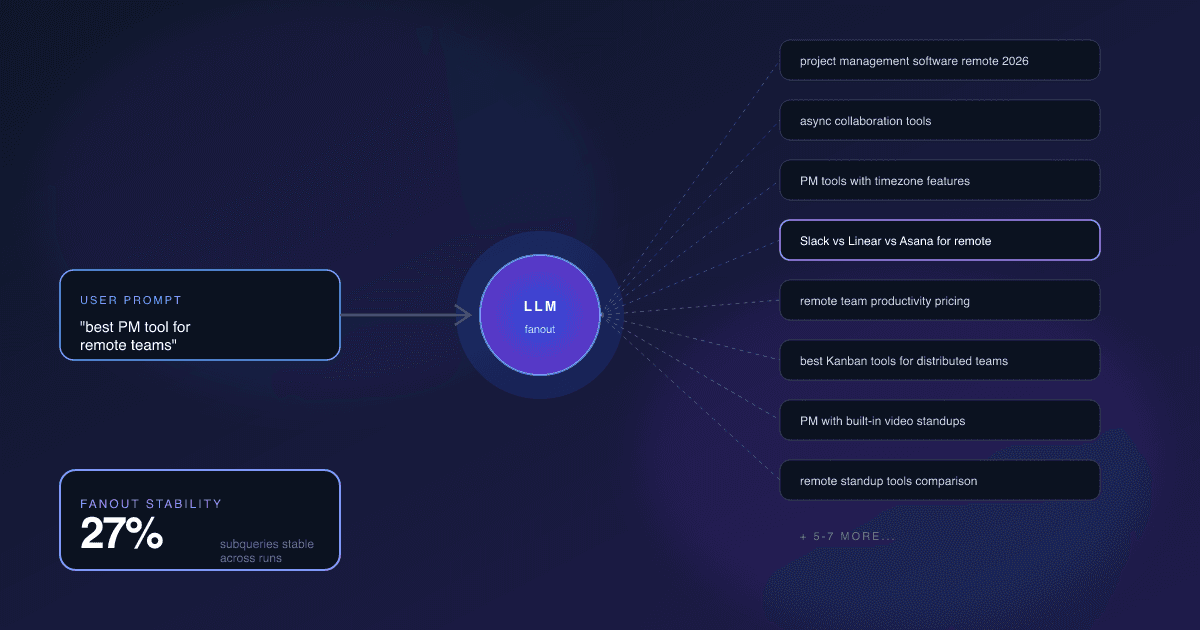
Query Fanouts: The Hidden Layer of AI Search That Decides Your Visibility
When a user asks ChatGPT or Gemini one question, the model silently runs 8-15 sub-queries behind the scenes. Whether your brand appears in those hidden searches is what really determines your AI visibility.

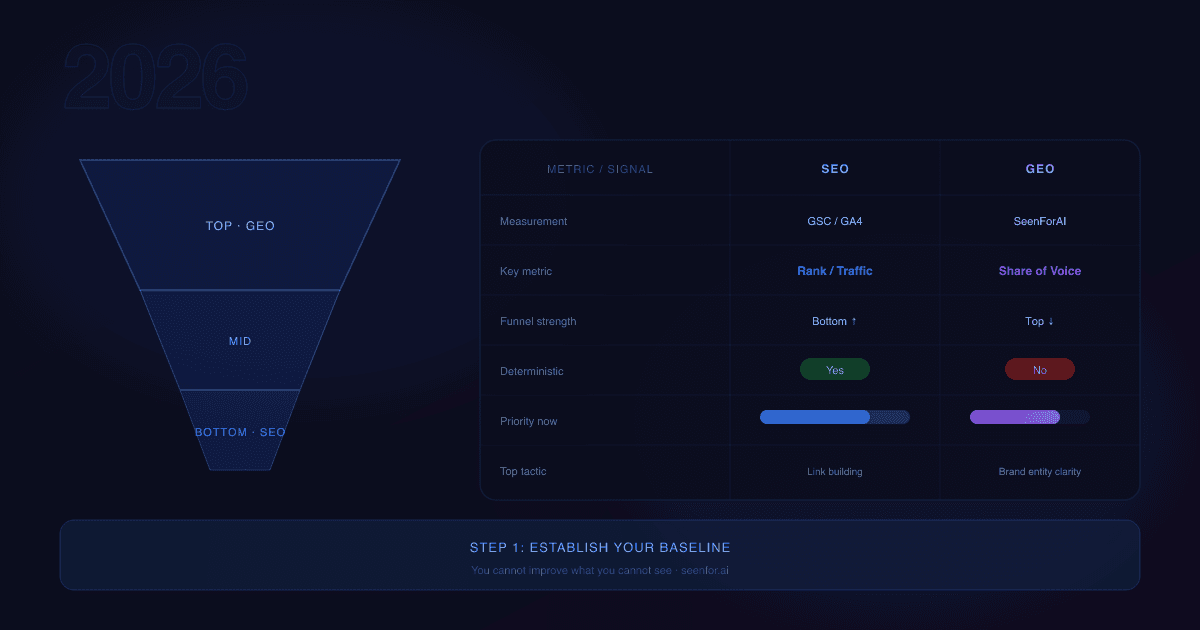
GEO vs SEO: What You Actually Need in 2026
Both still matter, but the investment priorities have shifted. Here's a practical playbook for brand visibility across search and LLMs.
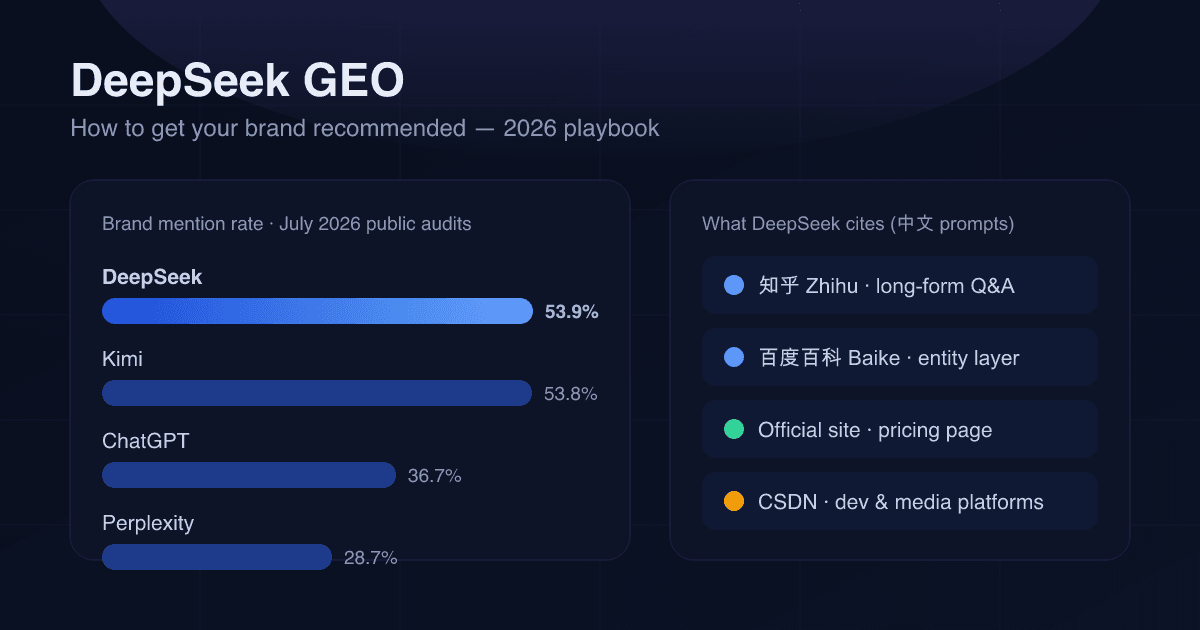
DeepSeek GEO: How to Get Your Brand Recommended (2026)
DeepSeek answers millions of product questions daily. Here's how it picks brands to recommend — and a step-by-step playbook to become one of them.
Product Newsletter
Stay informed
Receive release notes, and workflow tips from SeenForAI.